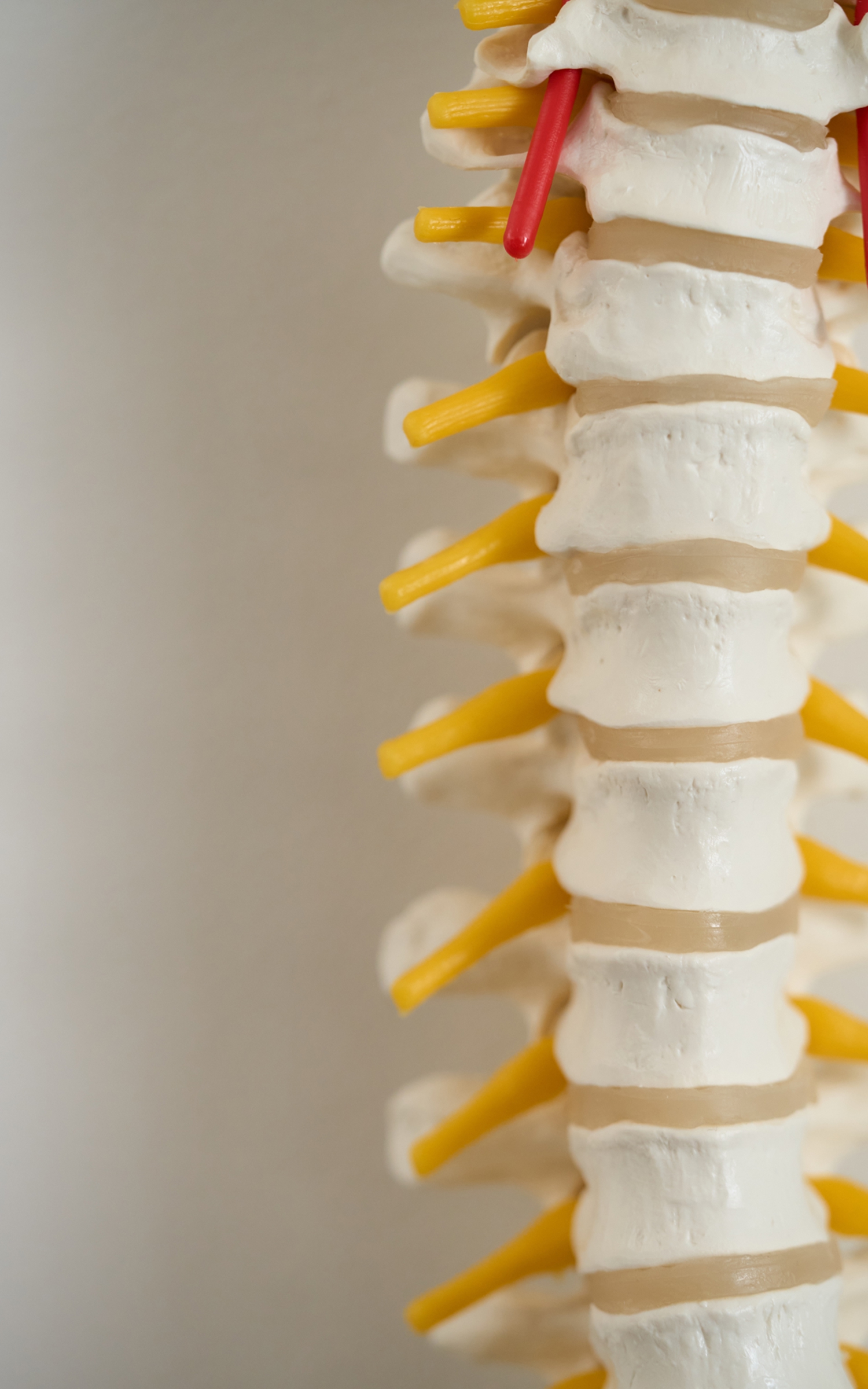
Why Does Your Back Hurt?
Whether yours is a physical job or you work in an office, you’re highly likely to have experienced back twinges or pain at some point. These can have many different causes: muscle imbalance, wear and tear, too little or too much exercise, one-sided exercise, poor posture, congenital physical defects and psychological factors can all lead to spinal or back problems. Even school-age children are increasingly experiencing issues with their backs.
The Pathway To A Strong & Healthy Back
A strong transverse abdominis muscle, robust tendons, supple ligaments and mobile joints stabilise the spine and ensure a healthy back. To target all these areas we need physical exercises that train the core muscles. Alongside the back muscles, the stabilising and supporting abdominal muscles play an important role – if the abs are weak, the back has to compensate.
Adjunctive Therapy
We also use spinal exercises as an adjunctive therapy:
For chronic back pain
For neck pain or headaches
Post-surgery for follow-up treatment of healed joints
For the prevention or follow-up treatment of slipped discs
For postural disorders, e.g. curvature of the spine (scoliosis)
For osteoporosis
The Aim Of Spinal Exercises
To mobilise shoulder, vertebral, sacroiliac and hip joints as well as the cervical, thoracic and lumbar spine
To strengthen the back, abdominal and core muscles
To stretch the entire musculoskeletal system
Spinal training combines approaches from sports science with sports rehabilitation and physiotherapy. It’s a preventive measure and an effective treatment.
Training Sessions
Indoor and outdoor spinal training sessions at the Mount Med Resort include specially designed mobilisation, strengthening and stretching exercises. The exercises are performed either standing or sitting/lying down, and make use of various props and pieces of equipment.